Until this past week, I’ve never been truly weary before. I’ve been exhausted, tired, drained, tapped out, and spent. Not weary.
Goodbyes are tiring. Traveling is tiring. Road trips, while they are the experience of a lifetime, are tiring. Sitting in a car at a ninety degree angle for sixteen hours at pop is tiring. Yes — even trail mix — is tiring. And, some combination of these things, at random or in succession, leads to extreme weariness.
So, I sit here in a fog. Waiting. Waiting for the moment to hit. The moment when I’ll begin processing all this change and movement I’ve been barreling through at warp speed. But, now, I allow myself the time to rest.
I try to write about home and place. The two things that have always fascinated me the most. They are synonyms and antonyms simultaneously. And, my search for home never started by going to a place, but, instead, by searching within. You must use caution. Home and place will deceive you. I’ve learned too well how familiar things can, very quickly, become foreign.
On the last leg of our trip, as my mother and I crossed over the Pennsylvania border, she said, “This is the East coast landscape I’m used to. It’s so green and lush. It’s beautiful. And, maybe it’s not as dramatic as the West coast, but, this is my home.” Those few, short sentences, summed up everything. My hopes and expectations for this move, the place I hold and have always held for myself in NYC, the sense of myself that I’ve left behind and — the one I’m returning to.
Sometimes, in those TV shows where famous actors or athletes return to their childhood hometowns the host will say, “Stay tuned, and watch as So-and-So returns to the place that made him!” I keep thinking about that. Because, I returned to my childhood home, and, in doing so, I left the place that made me behind. But, having been re-made somewhere else, and returning back home, has its advantages. — It makes everything here look new. Better. Or, at the very least, different.
It’s an unknown feeling. An exciting one. And, when I’m less weary, it’s one I look forward to exploring.
It’s like crossing a state line into something unexpected, but, still familiar. A life that’s green and lush. And, maybe not as dramatic as the one I left behind out on the West coast. But, here I am. And I won’t look back.
Because this — this is my home. And, weary or not, I’ve arrived.
We don’t have to say goodbye. To the people. The places. The things.
We can just let them be. — Who they are. Where they are. As they are.
This is my big lesson in letting go. The one I needed to learn. My unavoidable and inevitable truth.
My mother and I pack up my apartment, and, I wish it were different. I wish that my last moments here, in this place, weren’t tip-toeing around my life’s possessions, all of which are strewn haphazardly across the floor. I wish that the big, black garbage bags — one for Goodwill and one for the dumpster — didn’t sit in the middle of my living room, slinking, dark portals to the sad and hopeless lost worlds that await my unwanted past. But we continue — dismantling this world as I know it, piece by piece.
It helps to remember that — I can come back. Maybe in 5 years. Maybe 10. On a plane, or, in a car. On another road trip — maybe with some new beau, or on business, or I don’t know — with a baby. I can’t know how I’ll return to this place. And, I think that’s the thing that scares and excites me the most. Who will I become without this place? Will I like her? Will I miss this woman I am now? Revile her?
Who can say what I’ll be when I return to Portland? I don’t know. — I can’t know. — What I’ll be wearing. What job I’ll have taken time off from to make the trip back. Until that moment, I will not know whether or not I’ve found the illusive thing I’ve always been seeking.
So, instead, I do it. I let go. — I make peace with what’s here. Now. — Who I am. Now.
The most difficult thing, is this: Letting go of everything. Allowing it all to just be — as is. Not knowing how my dreams will return to me, or, how I’ll return to them. In 12-Step, this is called — turning it over. And, it’s the thing that I have always wanted to do, but, never actually did. And, here I am, — allowing it. Placing it all into someone else’s hands, because I am tired of wringing my own.
No promises or commitments. Just time and space. A strange, uncertain portal to my destination — like the garbage bags, sitting in the middle of the living room floor.
But, that’s the way I want to tie it all up. My sobriety. My love. My city. — My letting go. Memorizing all the people, places, and things that held me together. Keeping them somewhere safe, as I turn, and walk the other way.
I will place all these moments into a cranial time capsule. I don’t know that it’s something that I want to write. It’s something I prefer to feel. And, feeling, that’s something I learned to do here — in Portland.
I tape up boxes. I clank through kitchen drawers and cupboards. I clear my cache. I pack up what I need and I throw the rest into the black-hole-garbage-bags in the middle of the living room floor. — I make room for new things. I convince myself to forget about the ways in which I’ll leave, and return, to this place.
In just hours, I will no longer be an Oregonian. And, maybe, I never was one. But, in order for me to leave — I have to believe: I was. I have to believe that in the same way this place made me who I am, it also allowed me to become what it is. Oregon is inside me now. An integral part. Maybe even the central part.
So, I don’t have to say goodbye. — Not even to myself. I can allow it all to just be. As is.
Me. My Oregon. My Portland.
The people. The places. The things. — Who they are. Where they are. As they are.
As I pack, I find stories strewn about everywhere. Stacks of old papers. Pictures. Books. Dresses and socks. Keychains and candles. Molskines and mugs.
I can hardly breathe. — So, bear with me, there won’t be bonafide essays for a few weeks. Just travelogues. Notes on a transient life — which has spilled out in front of me like a bag of rice on the kitchen floor.
One thing is certain — we can tell who we were by the things we carry. Tim O’Brien once wrote a beautiful book that captured those feelings I’m only now beginning to understand.
What follows here are snapshots. Truly. There is so much more. Boxing up my life. Leaving this place I love. I sit with it. I look at it. All of it. I lay it all out on the cutting board. And, I cut away the pieces. Choosing the ones I will throw in my pot — and tossing the rest to the side.
I acknowledge these. These that were. These that shall remain.
1. Adam
His photos are all in one box. I put them there — years ago. A coffin at the top of a closet. The lid was covered with dust. We used to take photo-booth-photos everywhere we went. I still have all of them. The strip above was from our friend’s wedding. He loved me on that day — I remember — and I loved him back. We danced. We sat on cement steps with plates of food in our laps and we laughed. I have tried to throw everything of ours away before. No matter what I trash, I will forever keep this photo strip. Always. Because he was my first love. And, I will never love that way again. And this. — This is what that looked like.
2. Theresa
My maternal grandmother died before I was born, but I’m told that we are a lot alike. My mother says that she was no-frills. That she said what she had to say when she felt like saying it. That she insisted on eating salad with every meal. — And, that she was a fox. People see my fair skin and know that I’m Irish. But, they forget that her Mediterranean blood courses through my veins too. In the Summer, my shoulders turn her Italian, olive brown.
I knew my grandfather well. And, I knew he loved her real bad. — Even years after she died. — He’s gone now too. But, every time I consider settling on some guy — I think about them. And, I know, there’s some dude out there who’s gonna love me, real bad, even when I’m dead. And, I’m waiting for him.
When I see the picture above, the one with my mother sitting in Grandma T’s lap, I think to myself — we all look alike. And, we’re beautiful. Three generations of beautiful. Theresa’s dead, but she sees me. — I’ve known that since I was a kid. It’s weird. — I keep her pictures in every room so she can watch me. So she knows — her daughter did a really good thing.
3. Dad
My dad is, and always will be, a strange bird. But, there’s no guy in the world who will ever love me more. Growing up, he used to listen to a lot of classical music. Opera, symphony, choral — all that stuff. He had bookcases full of classical recordings. One day, he was just over it. Suddenly — it was all Bob Dylan — all the time. He used to pick me up at play rehearsal in Bensonhurst, Brooklyn and blast Blood On The Tracks like it had been released that day — every day. If we’re being honest, I’d rather not admit I know every track by heart — but, I do. My dad gives me Bob Dylan postcards and books. It’s like, he’s telling me — subliminally — if I get Bob, then, I’ll get him. That alone is enough to keep my interest. I don’t always acknowledge it, but, I love that my Dad is weird as fuck. Because, I am too. And, it’s nice not being so alone in my weirdness. He’ll watch an entire season of any HBO show I want — in 1-2 days. When I sold my complete series of OZ DVDs on Hawthorne yesterday, it kinda broke my heart. But, my Dad knows what’s up. He’s got HBO GO. And, I know, we’ll get back into it. And now, while we’re in the car — I get to pick the album. — I paid some dues getting through, Tangled Up In Blue.
4. Mom
My mom sends me a card for everything. They arrive so frequently, I forget how amazing they are. Now, I’m finding them everywhere. Sometimes, she’ll throw in some cash and tell me to grab a bite, or to do something nice for myself, or to buy the cat a treat. She wants me to be happy — always. In good, motherly fashion, she has always wanted me to have, feel, and be the best. I find her heart scribbled on tiny cards everywhere. Maybe she doesn’t know — I save them all. When I was little, she emphasized the art and necessity of the “Thank You” card. — How it will “never go out of style to have class.” How, to appreciate people and things is important. It occurs to me as I pour over her notes — crying like a child, because it’s uncanny how she always knew exactly when I needed saving — that I should send her more cards. There is no one in my life more deserving of thanks and kindness. She deserves nothing less than 100%class. And, there’s no one who needs more reminding to do kind things for herself. Someone needs to give her permission to feel good. Maybe that person is me.
The card above was sent to me at Christmastime — the year that my heart was first brutally slaughtered. Whenever I come across this note — I’m reminded of who I’m supposed to be. And, that’s a woman who’s a lot like my Mom. — Gracious, brave, strong, and impossibly classy.
5. Me, Myself & Eye
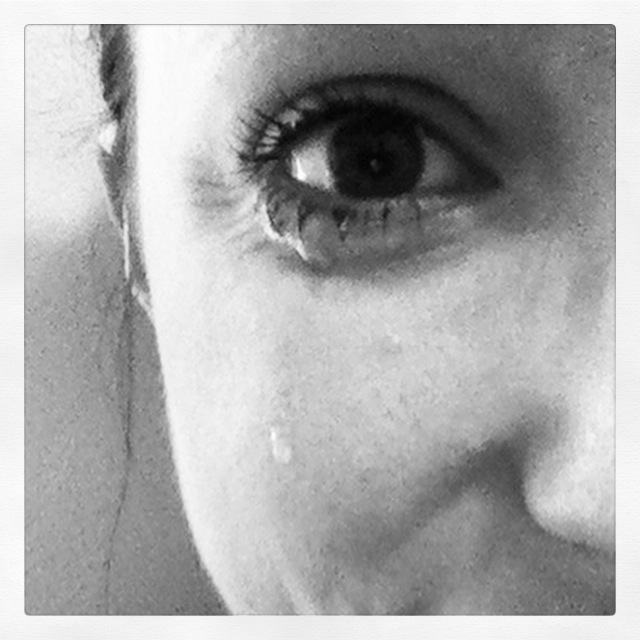
I took this photo yesterday in my kitchen.
I wanted to share a vulnerable moment with you this week because, well, that’s how I’m feeling. I wanted to show you the vulnerability. But, I don’t have to. I’ve been showing you for months and months. These things I’m packing up aren’t me. They’re my archives. All this crap I’m putting into bags and boxes — those aren’t the moments — they’re the evidence. Proof. My tears are like that too. All that outside stuff.
When you go to school to become a writer, they don’t teach you to write. — They teach you to read.
The voices. The colors. The timbres. Each writer’s words ring out their peerless note — dissonance or harmony — no two stories are the same.
Every writer has her unique fingerprint — even in her plagiarisms.
In high school they instruct you — The beginning! The middle! The end! The kind of storytelling that has somehow been distilled down to a series of predictable climaxes — each is noted on a three foot by three foot chalkboard. Written carefully in smudgy, cursive letters. All of which — have no meaning.
If you learned to read properly, you already know this three-pronged formula is a useless chore. — A map that leads you nowhere and discovers nothing.
If you learned to read properly, you already know that each story is just one dot on an infinite timeline. And, in the futile hunt to uncover everything, the writer’s unrepeatable dot marks, without knowing it, the unexampled treasures that she alone has illuminated.
No beginning. No middle. No end. — Just moments. — Dots.
This weekend, I packed up the last six years. Books in boxes, old notes and bills, yellowed rolling papers, dried up pens, and renegade Christmas ornaments. So many dots. Too many dots. Wonderful and tragic dots.
One, I set aside. A single page, tucked carefully away, hidden neatly in between the pages of my copy of James Joyce’s A Portrait of the Artist as a Young Man. — an entry, torn from my journal. I unfold it, only days away from turning six years old, it reads:
July 30th, 2009
It’s hot in Brooklyn. I’ve been sitting in front of the box fan, watching TV and wondering if I’ll miss the heat and humidity of New York when we get to Portland. — If we get to Portland.
Sometimes I wonder if it’s possible for me to get anywhere at all, because I’ve been sitting on a couch, somewhere in this city, just waiting for something to happen to me.
Three months until we leave this place. Home. Family. Friends. All for the wild frontier — The West. Ninety days to see what needs to be seen — To say goodbye. To worry. To plan. To Dream.
But, I try not to worry. Because, on most days, I’d like to be anywhere but here.
I read it twice. Then three times. And then, for that girl, I weep. Six years ago — and I still remember how she thought this place could save her. How saying goodbye would hurt her. How her story, six years later, would read exactly the same way, but, — she — she is impossibly different.
Today, I cannot be mistaken for that girl. I know now that — it’s true — this place did save me. And, even in the sanctity of being saved, I will still choose to leave it behind — my savior. I return to a different place, revisit another dot. An old dot that, now, I can finally allow to be new. A story I know well, but, I’ve yet to write.
In my living room, I see it written on a piece of paper. — How I’ve learned to read here. I embrace the moments where Oregon has made me into something that New York City never could have — Beautiful. Seen. Heard. The words may read the same way, but, there is a new heart here. I read it — the story that was written for his heart — before I knew my own. Before I discovered my seperate pieces. My own, little dots — strewn wildly across the Oregon dirt. The seeds I once placed in someone else’s hands for planting. — But now it’s my harvest. — I’ve grown my own fruit.
In Oregon, I learn to read again. — To read myself. — I connect my dots. I learn to hold these new things — My love. My loss. My beauty. My strength. My pain. My sobriety. — like my children, to my breast. I shoulder their weight and carry them back to where I started. And I begin again.
I see them. They mark my own timeline. — My unrepeatable dots. — A goodbye. A worry. A plan. A Dream.
(A very special thanks to the beautiful and talented Allison Webber for inviting me to be part of her photo series: The Personal Beauty Project. A series that empowers women, allowing them to be seen in the way that they see themselves. These images capture not only my spirit, but, the spirit of my Oregon. As I return to the East Coast, I am able to take these images with me. Images that, for me, represent so much of what and who I have become as a result of being part of this magical place. I encourage you all to enjoy Allison’s work at her aforementioned website.)
Oregon, if I could talk drunk to you — I’d say too much.
But, in between botched and blurred sentences, I’d speak those gems. I’d say things that my heart kept pad-locked-up until we went ahead and blasted the doors off with a fifth of Jim Beam and a couple of cold, tall pints.
It’s been a long time since we’ve opened those doors. And it’s been even longer since my heart allowed me to hear the things you’ve been trying to say. But baby, if I could talk drunk to you, I’d ask you — Do you remember being young? Not that you’re some old man, but — we’re old enough now that when we’re asked if we remember being young — we know the answer.
Do you remember loving her? Some girl. Any girl. This girl. Maybe she was quiet and lost. Maybe she walked up and down your coast. Maybe she stood in the arch of The Vista House, her hair flying wildly over The Gorge as she screamed out your name across the Columbia River and cursed you. But, do you remember loving her? Do you remember how you’d give anything for her to just call, or show up at your door? She’d look at you in a way that made you feel. Like you were really there — like you existed. Not only existed, but, existed just for her. Do you remember — feeling that way?
Love made you feel. Can you remember when love was humbling? When you’d bow down before it, sovereign, wanting nothing more than for it to look upon you? Just. One. Brief. Moment. — To crown you? We all felt it when we were young. Sometimes, because we didn’t know any better. But, more often than not — we did. Know better.
It’s not something you can escape. It captures you. And baby, I may feel old, but when I love you — when I let you go — I’m young. And my heart was once your happy captive. Those ideals that you thought I’d soon abandon, well, — maybe I will someday — but not today. Not today. Today this love rules me. It runs laps around my heart. It crushes me with its casual distance. And maybe, after our most recent repairs — your heart looks pretty shabby too, baby. But, if I could talk drunk to you, I’d tell you — It’s worth piecing together.
If I could talk drunk to you, I’d ask you to love me with that same, reckless abandon. I’d ask you to forget your old man heart and dive into mine, where things aren’t nearly as broken and battered as they were when I found you. I’d ask you why people give up on love when they’re finally old enough to feel it. I’d tell you, I may be young and stupid — but there are parts of me that are old — and I know more now than your green heart could handle. I’d tell you — I’m worth it. All of it. I’m that girl you couldn’t have back when you were seventeen. I’m the comfort that you never got from the women who held out their hands to light your cigarettes. I’m all that passion you beat down into your guts because you never thought you’d find someone who could match it.
Here I am.
If I could talk drunk to you, I’d tell you that — back then — before I met you, my love was like a paper cut. But now, your love fuels some massive inferno that turns my insides red-hot, and if it ever goes out, all that will remain is a burnt up cross where my heart used to be.
Oregon, you taught me to love. And, some days, I fear the love I have for you. You’ve broken me before. But, when you touch me, you spin that golden thread that pumps through my veins, straight to my heart. A drug that I’ll choose to give up, but, somewhere, I’ll always seek.
I should tell you — I’ve watched the sun rise over your head. And, that first time I told you I loved you, your sky said, “Oh baby, I love you too,” like I already knew, but, — I didn’t know. I never knew.
If I could talk drunk to you, I’d say that my love is crazy, and if you could see it, if it were an actual thing you could touch or hold — I know you’d want it. You’d want to keep it. You wouldn’t leave it on a shelf or stash it in some drawer. You’d wear it. You’d protect it. You’d carry it until whatever made you, made you no more.
If I could talk drunk to you, I’d tell you that — I know — I think too much. I wish it were that simple.
But, it’s not. Simple.
It’s time for me to go. But, you knew that already.
And, what good is talking drunk to you if I’m just telling you the things that you already know?
I lie on his bed while he shoots dope in the bathroom.
He runs the sink so I won’t hear him heat the spoon, but I still hear the flick-flick-flick of the lighter through the old vent in the floor. I can see though the walls. I. Hear. Every. Sound. The brown paste boils thin, to a liquid. The cotton top of a Q-tip soaks it up — breathes in the poison — like it’s alive. Each white fiber expands, taking on its color, like a web of molasses.
I stare at his water-stained ceiling. Rot from the upstairs apartment bleeding through the paint. The edges plume out and peel in the shape of mushrooms. I close my eyes. I see the tip of his needle drink it in. — His Heroin.
The plunger pulls back, and the spoon empties, like a tide going out. Smooth. Like a thick, dark caramel — drawn up by the moon. I cry quietly as I watch the way his cat just sits at the bathroom door. Waiting. — “C’mere kitty kitty.” I whisper.
I feel him poke his veins. Stick them. I found the syringes in his top drawer. Again. I hold the tops of my arms. I am outside my body. The girl is on the bed and the junkie is in the bathroom. I’m confused by my own acceptance. I allow this. My story. His story. Either way, it’s a war story. A story where sharp objects are made blunt and hard hearts are made harder. A world that defeats me with permission, not conquest. Then, I become her — some version of her — His Heroine. No. No. That’s wrong. It’s — His Heroin.
Some junkies will tell you that until you shoot dope, you don’t understand. — The high. The letting go. The relief. — It’s not true though. You don’t even have to move to understand. Just sit. Wait. — I sat perfectly still. I sat in another room while it swirled around me, not in me. A demon in the vents. You don’t have to feel that ugly, brown stuff pulse in your own, blue veins to witness its power.
Yield to it. Vulgar and dark. A power that turns your Hero into someone else. Something else. And then, you watch this creature lose everything. Lose themselves. Lose you.
But really………they just let you go.
Everything’s gone. And, all the while, I’m right there, it’s all right there. I try to trick myself into believing something that isn’t true. But, the cat’s still sitting, waiting, his tail curled neatly around his soft, white feet. And it is — true.
He will give up anything. Anything. And, I learn, this includes me. It hits like a revelation. Christ Our Lord, where are you? I’ll never be sure. But, look, listen! The stained ceiling. The vent. The sink. The flick-flick-flick. The breathing cotton. The needle pulls.
I’ve dreamed it. No — no. I’m still awake. I’m still frozen. Me. The cat. We’re sitting in the same places.
I’ve seen it in the movies. I’ve read my Burroughs. It’s not the same. It’s not the same as watching him. Reading him. Feeling him slip. I cast him off like a thin line from the side of my boat, and he’s just a heavy lure sinking into the depths of this — some bottomless lake. His eyes disappear in a pool of water.
I imagine how he feels when he ties one off. How it makes him safer than I ever could. How the needle is the lover I never was and never can be. Sometimes, I imagine that he is a drunk, like me — not this. I imagine that the scars on his arms and legs are from something else — like the butts of his father’s cigarettes, maybe. It’s easier when I have someone to blame.
Fuck the poppy.
In the Springtime a coworker tells me — “It’s such a happy little flower!” I smile at her, but behind my face, under my skin, I grit my teeth. Poppies. At their dark, sticky center — lives the seed. Devil’s sap. I won’t eat your poppy seed bagels. Not anymore. And, now, I check the ingredients on the back of the multi-grain bread.
Heroin. Just a seed. It will always be stuck in my teeth. I will poke at my gums forever — but no amount of prodding will free it. It’s right there. On the tip of my tongue. At the base of my molar.
He is in the bathroom and I’m sitting on the bed. Waiting.
Later — with eyes half closed, he asks: “You didn’t see me, did you?”
“No.” I say.
But, while he sleeps, I do see it. How his love has left his body. And with gloves and bleach, I wash it away.
Before you leave a place, it’s important that you commit it to memory.
Later, you’ll return to it like a dusty book on your shelf. You’ll run your fingers over its edges, and, you’ll remember something you didn’t realize you’d forgotten. It’s hard to visualize — the passage of all that time. Our memories, warping, fit in tightly-packed-cranial-crevices. But, it’s all right there waiting for us, on the dog-eared pages. We open up to that brittle spot, where the spine is cracked. We revisit our oldest secrets. For me, it’s always a story that begins in the Summer — when things were hot and uncomfortable.
* * *
Standing on the corner of Lombardy Street, where Williamsburg and Greenpoint are divided by the Brooklyn-Queens Expressway, in front of the sports-dive, The Callbox Lounge — Adam and I invented Portland.
Inside the bar, five Hasidic Jews draped their heavy, black coats over the backs of tall chairs. Their tzitzit dangled from their hips and their faces, framed in curls, sweat profusely while they watched the Yankees game. Some of them drank beer, some of them, Coca-Cola. This place was their secret. — And, Portland was ours.
We sat at the bar, bathing ourselves in the intermittent breeze of the sputtering air conditioner. We were so different then. Young. In some kind of love. Complicated, even before cracking. We didn’t care. And, we sat there without any real concept of time. We hardly knew the things that stood before us. Our world spanned the length of the bar — and that was enough. Adam’s face was radiant in a blue glow as Keeno numbers popped up on the grid of an old TV screen and, even now — I want to kiss him. Back then, we had plans. We were getting out of that city. Soon. Maybe a year. Maybe less. And beneath the highway, under a starless sky, the night was humming a song with its passing cars and rattling metal. We drank Budwieser and smoked cigarettes and we planned our escape.
Back then, I wanted anything but Brooklyn. I wanted open sky and long, wide roads. And, green. Lots of green. I dreamed of places where no one knew me. Us. Lost together. Anywhere. Winding through some unknown place. And so, we imagined Portland. I imagined Portland. — I imagined we’d be the opposite of what we were. — And together, we would draw our maps.
* * *
The day we left, I stood at the window of our third floor walk-up. I looked down over Nassau Avenue. It was starting to feel like Fall and my screen was thrown wide open. I remember seeing a woman down below with a baby carriage drop her scarf and an old man leaned down and picked it up for her in front of the deli with the blue awning. The scarf was red. — I was going to miss that place.
My mother was in our living room putting things into boxes. We had overestimated the amount of room in our car and my father walked up and down, up and down, up and down our steps taking bins, boxes, and bags back to my childhood home in Bay Ridge. “Don’t worry Dabba,” he said, “we’ll ship them out to you when you’re settled.” Dabba is my family’s nickname for me.
It occurred to me, as I stared down at my dirty, Brooklyn street — no one would call me Dabba where we were going.
Adam came up behind me and held my shoulders. I only remember this because it was unlike him. He was reserved. He didn’t hold my shoulders often. So, I leaned in, because, when you are scared and lonely and at the precipice of something imagined becoming real — you want Adam to hold you.
“Are we really going to leave today?” I asked, fat tears pooling in my eyes. The apartment still had too many things in it. My mother looked more perplexed with every passing hour. “Sarah,” Adam said, turning me around from the window to face him, “I don’t care if we leave everything we own on this street corner. We are leaving tonight.”
And, we did, that night, around 5 or 6 PM — I can’t remember. We left to find something we both had lost. Though, now, I know that our lost things were not the same. They had never been the same. But, he had been biding his time and I had ignored the facts. So, we invented a place that already existed. We assigned it meaning. And, we drove. We placed ourselves here, in the City of Roses. We walked along rivers we’d read about in books. We learned the names of mountains that, eventually, would rise up from our backyard into a sky that turned strange colors which we did not know how to name.
Oregon.
At the curb, I cried in my mother’s arms. There is no feeling comparable to leaving your mother when you are scared and she wants you to stay. My father’s arms held me a little too tight, and they spoke the words that he couldn’t. Adam turned the key. Ignition. That was the last time I saw Nassau Avenue — my mother becoming smaller and smaller in the side-view mirror.
As we crossed the Verrazano Bridge, our Polish landlord called my cell phone from Nassau Avenue. “You can’t leave mattress on street like this! I get fine! Garbage pick-up not ’til Thursday. Fifty dollars I going to have to pay!”
I looked at the side of Adam’s face. His silhouette sketched a thin line against a darkening sky that met the edges of Brooklyn’s shadows below. The bridge’s wires held us up. I was seat-belted in with our scotch-taped love and some kind of freedom and an emptiness that I will never be able to describe.
“Tell him to take it out of our security deposit,” he said. “We’re not going back.”
Some weeks, I’m bubbling over, some weeks — I’m tapped.
I pull up the chair to sit at this table. I open my computer. And, I stare at the screen — into all your faces.
I’m processing this story. Always.
Every week I feel like I’m in a dark room where the photos just soak forever. Nothing develops. But, still, I want to tell you everything.
There are a lot of these Goddamned pictures. So many stories. And, the plot can go a lot of ways while you’re waiting for things to come into focus. Stories get restless and start to write themselves. There are an estimated five billion hopeful story lines going full tilt right now. Some intersect, and some, escape, wild, out on their own. And, many of them, I can tell you with absolute certainty — hopeful or not — won’t end well. It’s funny, my best moments, my best stories in sobriety are the ones where I don’t feel sober at all. Right now — I’m running on fumes.
We all get high on stuff. Sometimes it’s legal, sometimes it not. I’m not sure what I’m high on this week. Fear. Excitement. Sadness. Loss. Epic confusion. I’m riding the wave and there aren’t too many cohesive thoughts. But, I’m enjoying being lost in this emotional blur which is decidedly better than just — being lost.
I stop here, every week, and disclose the state of my union, or, should I say, the non-state of my disarray. I like to stare into your computer eyes and let you know things. Like — I’m coming up on some cord cutting, and, I need to test the waters before I start hacking. There are still secrets that I have to keep from you. Maybe I’m high on that.
But, I can tell you this — I have plans for a little summer series. Stories. True stories. Portland stories. Expect those in the coming weeks.
Cord-cutting-cathartic-cross-bearing-down-on-this-12-bridge-city stories. Love. Love stories. Love that lived and died. In a bottle. In a pipe. In a needle. In a heart. In a city. — This city.
The thing that breaks us, is never the thing that really broke us.
It sounds nonsensical. But — it’s the truth.
Our minds and bodies are magical things. — Beautiful and complicated mechanisms of celestial science and engineering, built to withstand incredible stress. INCREDIBLE stress. Though, I’ll say in earnest, for me, it doesn’t often feel that way. — Especially having been broken recently by an insignificant thing.
I’ve been here — a big-mouthed Brooklyn-girl — in Portland, Oregon. I’ve made my own way for quite some time. I’m not scared. I’m not in any trouble. I’m not facing imminent danger. At least, I’m not anymore. I’m just fine. Though, I hate the word. — Fine.
But, last night, after dropping my mother off at PDX, sending her homeward toward NYC, I swerved in my lane driving back home on I-205, sobbing hysterically. Minutes earlier, back at the terminal, when my mother’s arms broke their lock from around my sunburned shoulders, I felt it. — A sincere desire to be vulnerable again.
It only takes one insignificant thing.
In recent weeks it’s all flooded back. My time. Here. In Oregon. I’ve watched a lover and partner of almost 7 years walk out on me, never returning to say goodbye. I didn’t break. I’ve been arrested. Battled addictions. Marched myself through rehab like a soldier. I never broke. I watched my new lover and partner of almost 2 years get strung out on heroin — again and again and again. Not a crack. I stood, through all this, strong, like an Oregon pine. Dropping my dead needles. Picking up my pieces. Picking up their pieces. I pulled it all back together, my sap, like emotional super glue. — But, leaving my mother at the airport. — That’s what did me in.
The insignificant thing. The moment where you realize that you’ve held your own world together for far too long. Somehow, even after standing in the eye of the storm, it’s in the push and pull of the insignificant things where we find we’re — Tired. Broken. Lost. And still, we find it difficult to let go. The body, in all it’s magical resilience, resists giving way. Finally straining and, eventually, snapping under the weight of this thing that reminds us — We must respect the nature of things.
A friend of mine, who got divorced a few years ago, bravely escaping an abusive relationship, recently told me that she’s tired of being the “strong one.” I know what she means. We send each other notes. We tell each other that we’re better for it. But, in truth, we’d both take happiness over fortitude any day.
Blinking back more tears, I struggle to see this place. — Oregon. — These trees. The Gorge. The Wild West. Open air and unspoiled land. This place, by nature, has made me an adventurer.
It’s not insignificant that, here, I have learned how to be shipwrecked and to wash ashore — wet — but still breathing. What’s more, I’ve learned that I can fall in love again. I can heal myself. And, I can skillfully duct tape my 2001 Honda Civic back together — with expert craftsmanship — and not care what my father has to say about it.
But, the insignificant thing I can’t ignore is this — an unshakeable feeling that, it’s possible, I don’t belong here.
There are only so many storms I want to weather. Only so many loves I will stand to lose. Only so many places where I’m no longer haunted by the person I once was.
A long time ago, in a one-bedroom, railroad apartment in Greenpoint, Brooklyn, I held a love bigger than my heart was meant to carry, and I told myself — Dream big. I freed myself up and, for a time, I loved fearlessly.
Those things I told myself back then — they weren’t insignificant. They were my system of road maps. Maps for letting go. Holding on. Surviving. Breaking. Rebuilding. Reviving. Re-starting.
On I-205, a man in a Toyota Tundra watches me sob at the merge. I allow it. I allow my mother’s departure to break me. Suddenly — I care not for strength. I give up on mourning the things I lost. I decide to abandon the dream I was hell bent on living so long ago. I allow myself to want again.
Something else. Someone else. Somewhere else.
And, before I reach the exit for Powell Blvd., I watch the course of my life change in my side-view-mirror — the one that’s duct taped, securely, to the driver’s side door.
And, without anyone else’s permission, I vow to follow it closely — wherever it goes — my insignificant thing.
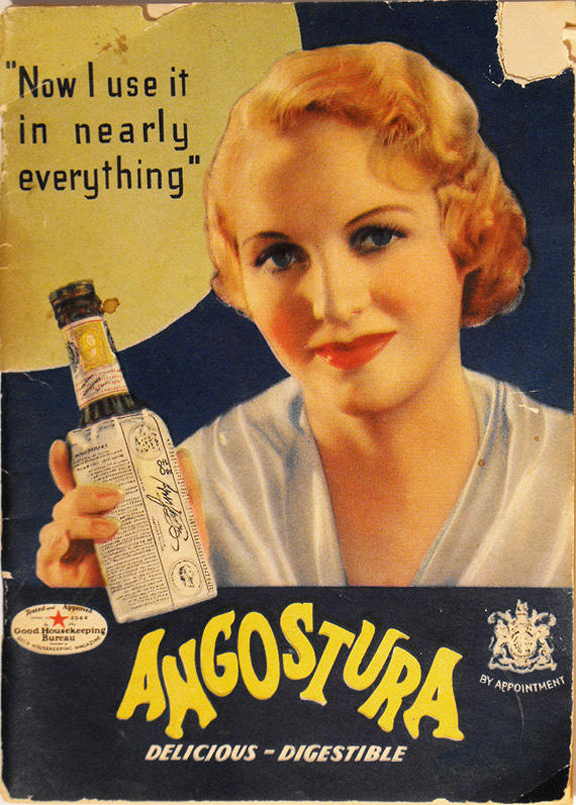
I sit at a bar shaped like a horseshoe and I order soda with Angostura bitters.
My 12-Step friends will hold the bitters against me — the same way they do when I lick the side of the vanilla extract bottle while I’m baking. I decide I don’t care.
I’ve been waiting for this.
I sit across from a hipster-geek in a wool, skull cap. The weather’s too warm for that, but, in Portland, no one cares. The bartender showcases a tequila bottle I don’t recognize for two drunk women at the end of the bar. They snack on fried food and chew with their mouths open and they don’t realize how old they look, bat-bat-batting their eyelashes and laugh-laugh-laughing at something the bartender says, but, everyone knows without hearing — it isn’t funny. Their husbands are outside smirking and smoking cigarettes. They turn to gawk at a group of three, tall twenty-somethings who walk by in patterned leggings that hug their perky, little asses.
I hammer my straw down into the ice, like I’m breaking something up. I stir — like there’s whiskey at the bottom of my glass. There isn’t. But, I continue eyeballing the good shit on the shelf.
I pass this bar every day. I look in its big, rectangular windows. Behind my own reflection, I see smiling lips that leave blots of red lipstick on the edges of tumblers and the tips of little, black straws. I wanted this — to sit here. To feel it. Soft leather. My purse dangling from a hook at my knees. I wanted to breathe out. — A release. A homecoming. My heels drawn up against the sides of a bar stool. — I’ve waited.
The perfect conditions. The right amount of cloud cover. The slice of evening right before the Saturday crowds filter in through the angled, double doors. A hum, a quiet energy — like something might happen. But it doesn’t.
I can’t explain it. — It’s not what I wanted.
The hipster-geek doesn’t look up from his smart phone, even when his hand searches along the bar for his drink, which, I am certain, is an old fashioned. The older women, who think they’re young, wave their hands back and forth. Pinot gris sloshing at the sides of their glasses, just barely contained. The bartender reaches for his bar rag, but, in the end — doesn’t need it.
I ask for my bill.
“All you had was soda. Right? We don’t charge for soda.” The bartender walks away from me. So, I thank his back. This is what being castrated feels like — I imagine. Suddenly, I’m worth even less than the dollar it cost for me to keep the seat warm.
Whatever it was I was hoping I’d feel — I know now — I can’t anymore.
The chewing, cackling hags. The lechers with cigarettes that dangle from their lips. The bartender’s display of insincerity and faded tattoos. The smell of spilled beer and dirty mop water. It’s hardly a return to the days I used to live for. — His hand grabbing for mine, while we poured over menus, the sun sinking into another river. Here, I’m lonely. And, the wood of this bar is scratched.
At home, I crawl into bed and I lay very still. I bury a feeling I didn’t know I still had.
I just wanted a moment in the bar. But, the moment’s gone.
Rain taps the window and the cat swats the venetian blind and I miss things I haven’t missed in a long time. Adam. And New York. And our railroad apartment. And they way the sun spilled over Nassau Avenue in the summer when I was twenty-five.





 saucysobriety