A Temperature I Can Live With

just-ducky-8-x-10-811x1024

The last time I felt like I was on fire — I was bonafide crazy.

Holy. Hotness. Boiling over. And, that’s how I know things have gotten bad. — The heat.

It’s been building. Pressure. But, I’ve been preparing for this moment. — The moment where I miss Portland. The moment where I wonder if I made the right choice. The moment where I have my doubts. And, I knew, I knew this moment was on it’s way — so, I readied myself. And, when it arrived, as planned, I embraced it like a lost child, dropping everything to find a place to go cool down with it.

When the hot iron of crazy strikes, and, it’s happened to me several times since getting sober — I know that I have to stop everything. Completely cease. Mentally rest. I tend to run on fumes. In this state, my mind will go ape-shit and find itself creating the worst possible outcome — every time. I let small obsessions take over. I’m curt and angry. And, I show it. I hate showing it. I feel like I might lose my mind. So, this time — I was ready. And, when the moment hit, I made a beeline to the nearest place I could be alone. To sit in it undisturbed. — Silent. Silent. Silence.

The church was empty. Marble echoed the squeaky sound of my black Vans. I looked up at the alter. And I let Jesus know — “I’m back.” But, I’m not really here to pray. So, I tell Jesus that too.

“I’m not here to pray, Jesus. — I’m just crazy.” And, I’m pretty sure, he’s heard that line before.

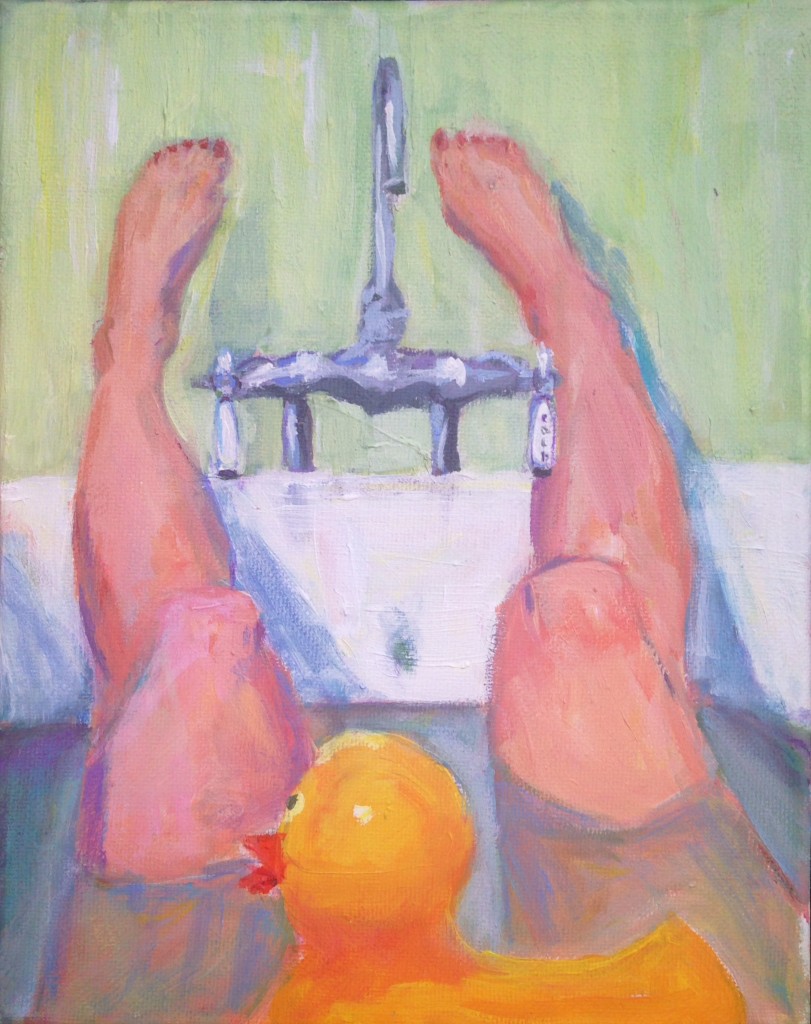
The last time I sat still, with intention, was back when my ex was kicking heroin then using heroin then kicking heroin then using heroin then kicking heroin. I felt like I was hanging on for dear life. So, every night, I lay in my Portland bathtub and I waited while the water turned from scalding to tepid. My mind, still. I’d be hot and then I’d be cold. And, so, so still. I’d move the water back and forth slowly with my shriveled fingers — but everything else would remain — calm. I let all my thoughts go. I allowed my sadness and my confusion and my pain and my fury and my forgiveness and my hope to coexist in that white, rectangular pot — all of  it, just steeping in the water. I let it come to a boil, and then, I let it cool. I let it cool down until it was just so. Just bearable. A temperature that I could live with.

I sit in an empty church pew because I don’t have a bathtub anymore. I explain this to Jesus. And I apologize for using his space. I tell him how I just need to let the water cool. And, then I let him know that I might need help with that, “you know — if you have some time.” And then, I feel like I need to explain that it’s not about my junkie ex-boyfriend, or anything super serious like that. It’s just me. Me and my shit. I had to clear all that up for Jesus. So, I told him about being homesick. And, — “I know, Jesus, I know — that sounds funny, because I was just homesick for home and then I moved home and now I’m homesick for Portland — which was home — but wasn’t.” And then, I apologize again, because, — “I know, Jesus — it’s fucking confusing.”

After about a half hour, I realize that I’ve asked Jesus to assist me with quite a few things. I wonder — were those prayers? Did I just pray to Jesus? Nah. I turn my head around and, behind me, I see there’s another man praying now. He’s on his knees about ten pews back. I whisper to Jesus — “Help that guy first.” After all, I’m just here to cool off. “Really. Don’t worry about me. I’m good.” — It’s quiet here. That’s all I need.

Cool air blows in from the side door when a little, Latina woman shuffles in with a black and white shawl wrapped around her shoulders. I watch her shove a few dollars in the copper collection box and she lights two red candles. A chill creeps up the sleeves of my hoodie. Cools me down. I feel my blood go from boiling to tepid.

On my way out, I genuflect and, then, I stand in the aisle and tip my black-knit-beanie up to Jesus. “Yeah. So. Thank you, for the space and the air, I mean, for everything. Amen.”

And then, I try to begin again. — With a brisk walk back home.


Artwork: “Just Ducky”; Beth Carrington Brown;

Just Ducky: A bathtub painting


The Coffee Shop

Photo Oct 04, 10 47 31 AM

I watch the sun come up in the window of the coffee shop where I work.

I got the job a few weeks ago. — A barista.

I arrive at 6:25AM, five days a week. I brew big carafes of coffee, set out pastries in a glass case, and watch as the Avenue begins to open its eyes and welcome the day. The coffee is the best part. It smells warm and sweet and I breathe it in as deeply as I can throughout the day. And — I know — that when this time in my life is over, I will walk into some cafe, any cafe, and the smell of coffee will remind me of how the light splashed down Third Avenue in the Autumn of 2015.

After the morning rush — a parade of school teachers, mothers and fathers with sons and daughters keen on a breakfast of doughnuts, chocolate croissants and macaroons, crabby little-old-ladies, suited business men, and a suave Italian who always orders a cortado with “just-a little extra milk” — things slow down. It’s still. One regular sits at his computer quietly, for hours, eating his giant, cinnamon-sugar doughnut. I stock white paper cups and stamp white paper bags with our shop’s logo. I look out the window and I ignore the elephant in the room.

I’m just taking cover here, in Bay Ridge. Other parts of Brooklyn still lay in ruins.

I avoid the subway lines in certain neighborhoods. I decline invitations from friends who are headed into different parts of the borough. I’m still walking around in a mine field without Kevlar.

It’s not just that Brooklyn has changed. Change — I expected. It’s what hasn’t changed. The places that still remain — as if I’d never left  — a skeleton of a city that I once shared with someone else. When I left Brooklyn in November of 2009, I wasn’t an “I.” “I” was a “We.” We left this place. It had been ours. Everything. Parks and street corners. Restaurants and bars. Cafes and clothing stores. And Avenues. So many Avenues. I cannot escape how the light falls here. It’s like a time machine. Brooklyn, B.P. (Before Portland) and Brooklyn, A.D. — the two blur, in some strange warp.

Seven years later, I pass the same places and I want to melt into the cement. — To disappear. — All these little things I once loved, still living in the same space. Some are gone, too. My heart aches — for all of it.

But, here, in the coffee shop, I’m safe. The faces are, for the most part, kind. The Brooklyn accents, comforting. And, the smell. Oh, the smell. I grind the beans and I lean in as I pull the cleaning lever, watching, as a little cloud of fine, ground coffee puffs out into the air — flakes of fragrant, roasted perfume. I pour creamy espresso shots into little, ceramic cups and its aroma wafts up and into my nose. The little metal spoon clinks. The machine drips. drips. drips. the drip coffee into a steel carafe. A woman tears the top off a pack of Domino sugar. Everything feels calm and manageable.

I hand a little boy a clear bag that displays his little, coconut macaroon. His father buys one for him every morning. He tilts his head and smiles at the cellophane bag and the gold sticker that secures it. “What do you say to the lady?,” his father asks him. The little boy teeters back shyly into the wall opposite the counter and mumbles, “Thank you.” His father smiles at me when I hand him his cup of coffee. “Come on bud, let’s go.” He ushers the small boy out the door, but, the boy always looks back in. First, to me, then, to the case filled with macaroons.

I know that feeling. Looking back into a place that’s so hard to leave — so inviting. I feel his melancholy — forced to leave his dreams on the wrong side of a glass pastry case. But, it’s all just a part of growing up. He will learn. The necessity of leaving things behind. Too much sugar. He’ll know better. He’ll know what he can return to, and, he’ll know what he has to abandon. Yes, he’ll know. — Gold stickers will not always hold things in place.

I wipe down the counter where a few drops of coffee have spilled.

When I remember this time in my life — I know — I will remember the smell of this place.

I breathe it in deeply. Warm and sweet.

Coffee.


Jesus and Our Marbles

KOR_1297blog

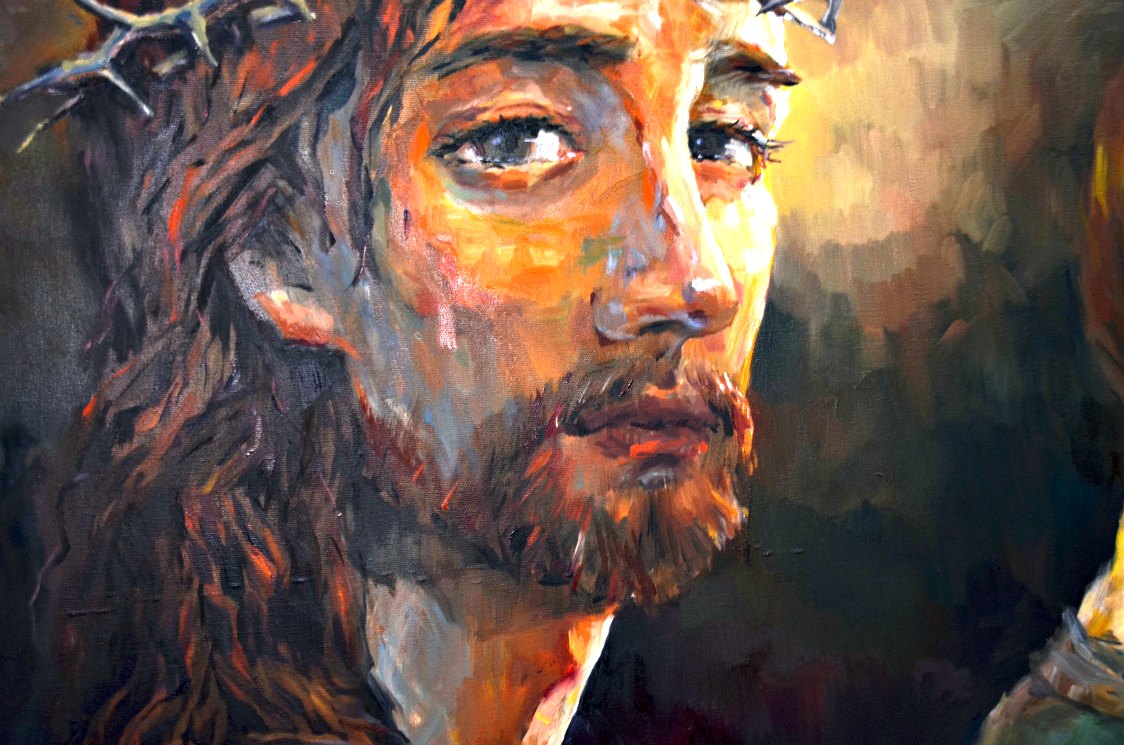
Sunday. — I’m on my knees in a church pew, and — I’m waiting.

Sometimes church seems like the only appropriate place to go when my head feels like the inside of pinball machine. Voices are echoing and the organ is humming. And I’m not sure that anyone’s really listening, but, truth be told — I may not really be praying.

At St. Patrick’s, in Bay Ridge, the crucifix is painted on the wall. It’s a weird sorta mosaic. In most churches, it’s a statue or pillar — something three dimensional — just so you know that Christ is hanging right there in front of you. He’s solid. His limbs are smooth and round and the nails in his hands and feet are these tiny raised bumps that you can reach out and touch if you’re so inclined. But, not here. Not in this church.

I think about that — the dimensions of Christ — while I try to pray. I attempt to slow the thoughts that race around my brain. Today, there’s a lot going on. There are too many prayers. I can’t pick out just one. There isn’t enough time. I try to pray for everyone else and find some way to ignore all my crap. I mean, that’s what I should be doing. But then, where will I put it all? — All this stuff I brought here to iron out?

After the priest reads the gospel, our hearts spill all of their contents onto the floor like giant bags of marbles. Rolling wildly under the pews and across the aisle. No one else hears or sees them. — Well, maybe, mosaic Jesus does — but, if he does, he doesn’t move or change his expression. He’s still just casting his eyes down at Mary with that sad-face that all church Jesus’ have — I mean — he’s dying. And us, we’ve only lost our marbles.

At the end of the homily, my friend, who joined me for mass, grabs my knee. It was like everything that the priest said was tailored to us. With a sideways look, we silently acknowledge this. The strange thing is, we’d only walked down to St. Pat’s because Our Lady of Angels, twenty blocks away, had the wrong fucking mass times posted on the their website. So, when my buddy and I arrived at 11:30AM — missals blazing like spiritual gangsters — the priest was already sending parishioners off, in peace, to love and serve the Lord.

So, here we are, at St. Pat’s 12:30PM mass. Praying and not praying. Spilling our marbles. Waiting for JC to give us a sign that something good is headed our way. But, neither of us gets one. — JC is still motionless up there on the wall.

The mass ends, and after the priest and his posse file out, we follow suit. We leave our marbles scattered across the church floor. Because — it’s better that way. We know they’ll get sorted out here, even without us.

We walk down Third Avenue, where there’s a street fair in progress. There are bagpipers playing and little kids with painted faces and it smells like funnel cake and Italian sausages and my buddy keeps stopping in the middle of the street to adjust his shoe.

For some reason, around Eighty-Third Street, he and I both start to laugh. I’m not sure what came over us. I’m not sure what happened in that church. What we took. What we left behind. But, I will say this — even though I couldn’t say a prayer to save my life — I’m almost certain that one was answered.


Artwork Photo Credit: Jesus Christ, Painting in a Catholic Church in Maseok; http://d-roamingcat.blogspot.com/2013_02_01_archive.html?m=1


The Hunker Bunker

wyeth-day-dream-1980

There is nothing worse than being stuck.

I’ve heard it said, the definition of hell is standing in one place while wishing you were standing in another.

Unfortunately for us, it would appear that the human experience itself is an ongoing parade from one plane of our stuck-ness to the next. We stop. We assess. We look for new places to stand. And, me, I know — I’ve been in this spot before. I’ve felt it. — Change is imminent. I’m on the brink, but, I still find myself looking too far down the path ahead. I get caught up in distances that are too mysterious to gauge.

And, when I become overwhelmed by my own sense of place — or lack thereof — I do it. — I hunker.

My best friend can predict my hunkering — episodes of withdrawal and isolation — with laser-like precision. It’s no secret when I am tired of fighting the good fight. I become exhausted searching for the next, best place. So, I resign myself to my bed where I binge-watch television shows on Hulu and Netflix and tell myself that nothing will ever change. Ever. Ever. Ever.

It sounds terrible. But, in truth, it’s pretty fantastic. Not only is hunkering incredibly relaxing, non-invasive, and cheap — it’s the pre-cursor to breakthrough.

I wrote recently about the advantages of identifying patterns. — How labeling my predictable routines has helped me to see where I was wrong, or where I needed to change, or where I kept putting myself in harm’s way. And, yet another advantage of this self-awareness is — you know when things are about to shift.

Hunkering is a sign. And while I’ll admit that it’s a behavior that sends up some red flags, — mainly a house-ridden, quiet, and antisocial alcoholic — it’s not all bad, I assure you. I’ve camped out in the hunker bunker many times before. I know the drill. And, I know that what follows is the sincere desire, drive, and momentum — to evacuate.

An experienced hunker-er knows that change is inevitable. There are only so many hours we can stay in the good graces of our beds. There are only so many days we can devote to celebrating our own misery. And — there are only so many episodes of The Mindy Project available on Hulu Plus.

The truth is, if we stand in one place long enough, wishing we were standing somewhere else — we will eventually move toward that other place. We move because it is unbearable if we don’t. Sometimes, we don’t even know that we’ve taken the step.

To hunker is to catalyze.

So, I tell my best friend, lovingly — I’m going. Don’t call. Don’t write. Don’t text. I’m headed into the bunker. I know the drill. I celebrate my stuck-ness. I know where I’m disappearing to, and I know what’s coming. And, soon — I’ll emerge.

Because, after standing in the same place for far too long there is nothing else to do — but move.


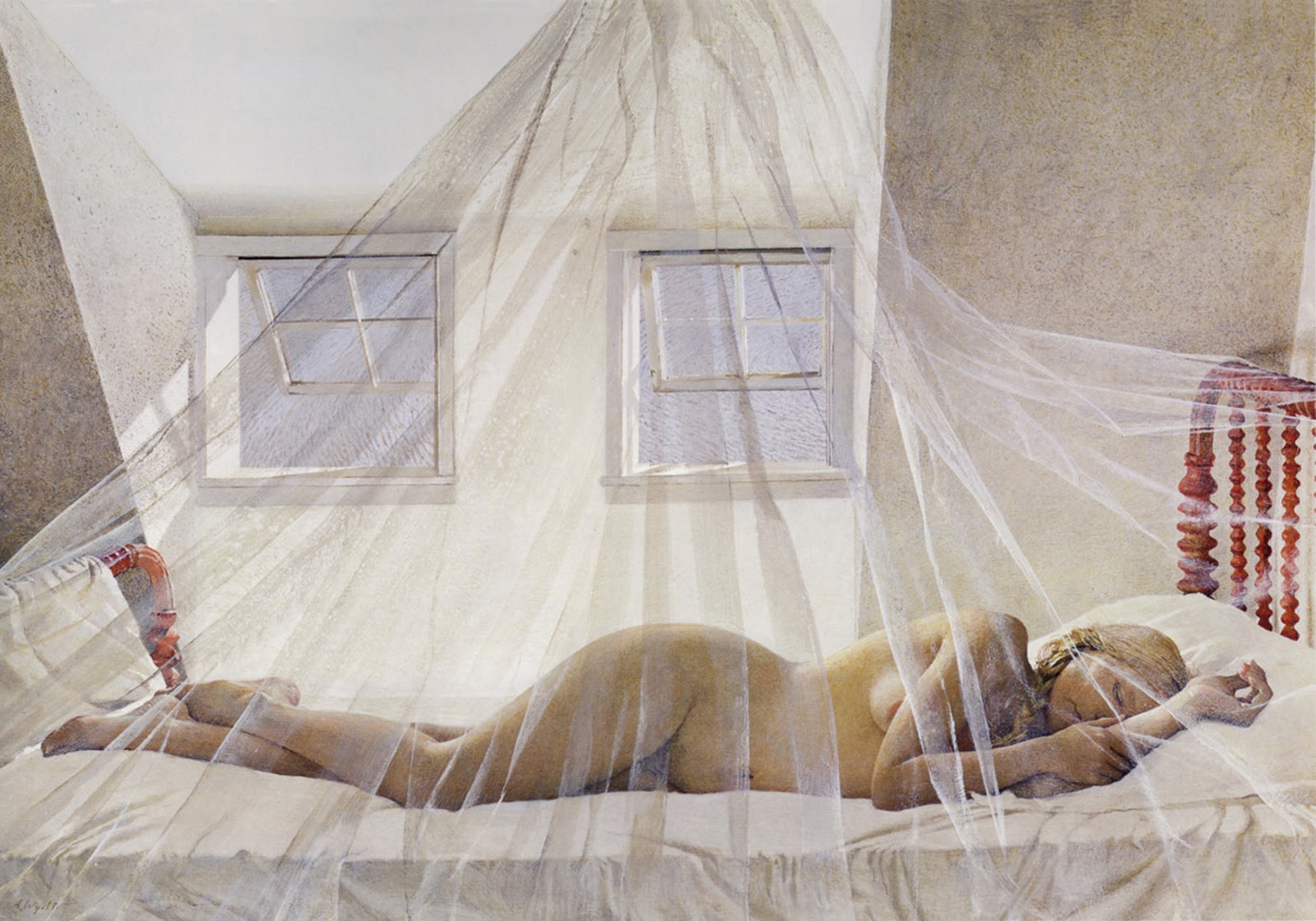
Artwork: Andrew Wyeth; Daydream, Tempera on panel.

Three Years On The See-Saw

str180-1

We wake up. Really slowly.

Maybe it takes a year or two to move one, rotten inch. And, it’s sneaky, the business of waking up. Fucking subtle. So, don’t expect it to hit you hard or for it to happen all at once. It’s not some invincible force that saves and redeems you. But, it happens. There is an awakening.

Today marks three years sober. And, like every year, for the past three years, I’ve spent the week, leading up to today, trying to figure out where, exactly, I fit into all of this. Sobriety. — A word I throw around somewhat haphazardly. — I often forget the weight of things. Honestly, I’d being lying if I told you I felt one way or the other about it. In truth, it feels like I’m standing right in the middle of an enormous see-saw.

I wasn’t always up for the balancing act. Three years ago today, I wouldn’t have been able to stand in the middle of anything. Everything was an extreme. — Loss or gain. In or out. Good or evil. God or none. — One side or the other.

Today, I’m not so sure. I find that I’m often open to things that I’m not privy to. Miracles. Fate. Divine intervention. Maybe even some chaos and anarchy. — But, I’m open. That’s for sure.

The night before I got sober, I got cut off at my favorite pub. The owner told me, “Happy Birthday,” as I walked out of his bar, shitfaced. He knew all about sober anniversaries. He was a good guy who was happy to see me go. I, on the other hand, wasn’t so happy. I knew my drinking was bad news, but, I wasn’t so sure that the alternative was better. I think about her — Good ol’ shitfaced me. The girl who was so uncertain about the possibility of something genuinely good coming her way. And, three years later, I look back on that time, wide awake. I didn’t know how to comfort myself back then, because — I wasn’t there. But, now, I’m here every day. And all my voices speak.

The voice that reminds me to cry. The voice that tells me to step up. The voice that ushers me, with care, away from the people and places that no longer serve me. And, the voice that honors all that I’ve lost in these three years. — Together, we kneel at the graves of the many versions of myself that I’ve buried because they didn’t learn the right lessons.

I stand in the middle now, with confidence. Because I know, sooner or later, like it or not — this see-saw’s gonna flip and I’ll see what each end has to offer. I’ll stand high and I’ll sink low. Tides turn. And, I’m not afraid of the change anymore.

It’s nothing I can mark on paper. It’s not even a feeling. Three years is nothing but a notch I use to keep my place in the mess of cogs — a system in flux. Something that, next year, will be even more expansive. Awake and limitless, without warnings or boundaries. I count the years even though I know now — they mean nothing.

Just more room. Room for losses and gains. Ins and outs. Gods and none.

And me. There’s finally room for me.

And, I’m standing, three years deep — in the middle of it all.


Artwork: Life’s See-saw By: Brad Stroman; http://convergencegallery.com/stroman/stroman.html


(Un)Pack Your Heart

Photo Aug 04, 5 12 17 PM

I am leaving Portland in 48 hours.

As I pack, I find stories strewn about everywhere. Stacks of old papers. Pictures. Books. Dresses and socks. Keychains and candles. Molskines and mugs.

I can hardly breathe. — So, bear with me, there won’t be bonafide essays for a few weeks. Just travelogues. Notes on a transient life — which has spilled out in front of me like a bag of rice on the kitchen floor.

One thing is certain — we can tell who we were by the things we carry. Tim O’Brien once wrote a beautiful book that captured those feelings I’m only now beginning to understand.

What follows here are snapshots. Truly. There is so much more. Boxing up my life. Leaving this place I love. I sit with it. I look at it. All of it. I lay it all out on the cutting board. And, I cut away the pieces. Choosing the ones I will throw in my pot — and tossing the rest to the side.

I acknowledge these. These that were. These that shall remain.

1. Adam

Photo Aug 04, 4 40 23 PM

His photos are all in one box. I put them there — years ago. A coffin at the top of a closet. The lid was covered with dust. We used to take photo-booth-photos everywhere we went. I still have all of them. The strip above was from our friend’s wedding. He loved me on that day — I remember — and I loved him back. We danced. We sat on cement steps with plates of food in our laps and we laughed. I have tried to throw everything of ours away before. No matter what I trash, I will forever keep this photo strip. Always. Because he was my first love. And, I will never love that way again. And this. — This is what that looked like.

2. Theresa

Photo Aug 04, 4 46 16 PM

My maternal grandmother died before I was born, but I’m told that we are a lot alike. My mother says that she was no-frills. That she said what she had to say when she felt like saying it. That she insisted on eating salad with every meal. — And, that she was a fox. People see my fair skin and know that I’m Irish. But, they forget that her Mediterranean blood courses through my veins too. In the Summer, my shoulders turn her Italian, olive brown.

I knew my grandfather well. And, I knew he loved her real bad. — Even years after she died. — He’s gone now too. But, every time I consider settling on some guy — I think about them. And, I know, there’s some dude out there who’s gonna love me, real bad, even when I’m dead. And, I’m waiting for him.

When I see the picture above, the one with my mother sitting in Grandma T’s lap, I think to myself — we all look alike. And, we’re beautiful. Three generations of beautiful. Theresa’s dead, but she sees me. — I’ve known that since I was a kid. It’s weird. — I keep her pictures in every room so she can watch me. So she knows — her daughter did a really good thing.

3. Dad

Photo Aug 04, 4 39 13 PM

My dad is, and always will be, a strange bird. But, there’s no guy in the world who will ever love me more. Growing up, he used to listen to a lot of classical music. Opera, symphony, choral — all that stuff. He had bookcases full of classical recordings. One day, he was just over it. Suddenly — it was all Bob Dylan — all the time. He used to pick me up at play rehearsal in Bensonhurst, Brooklyn and blast Blood On The Tracks like it had been released that day — every day. If we’re being honest, I’d rather not admit I know every track by heart — but, I do. My dad gives me Bob Dylan postcards and books. It’s like, he’s telling me — subliminally — if I get Bob, then, I’ll get him. That alone is enough to keep my interest. I don’t always acknowledge it, but, I love that my Dad is weird as fuck. Because, I am too. And, it’s nice not being so alone in my weirdness. He’ll watch an entire season of any HBO show I want — in 1-2 days. When I sold my complete series of OZ DVDs on Hawthorne yesterday, it kinda broke my heart. But, my Dad knows what’s up. He’s got HBO GO. And, I know, we’ll get back into it. And now, while we’re in the car — I get to pick the album. — I paid some dues getting through, Tangled Up In Blue.

4. Mom

Photo Aug 04, 4 43 57 PM

My mom sends me a card for everything. They arrive so frequently, I forget how amazing they are. Now, I’m finding them everywhere. Sometimes, she’ll throw in some cash and tell me to grab a bite, or to do something nice for myself, or to buy the cat a treat. She wants me to be happy — always. In good, motherly fashion, she has always wanted me to have, feel, and be the best. I find her heart scribbled on tiny cards everywhere. Maybe she doesn’t know — I save them all. When I was little, she emphasized the art and necessity of the “Thank You” card. — How it will “never go out of style to have class.” How, to appreciate people and things is important. It occurs to me as I pour over her notes — crying like a child, because it’s uncanny how she always knew exactly when I needed saving — that I should send her more cards. There is no one in my life more deserving of thanks and kindness. She deserves nothing less than 100% class. And, there’s no one who needs more reminding to do kind things for herself. Someone needs to give her permission to feel good. Maybe that person is me.

The card above was sent to me at Christmastime — the year that my heart was first brutally slaughtered. Whenever I come across this note — I’m reminded of who I’m supposed to be. And, that’s a woman who’s a lot like my Mom. — Gracious, brave, strong, and impossibly classy.

5. Me, Myself & Eye

Photo Aug 04, 4 48 08 PM

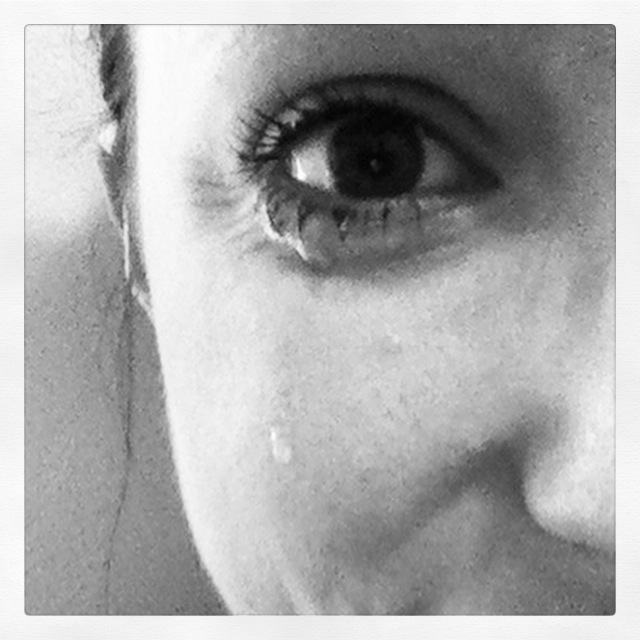
I took this photo yesterday in my kitchen.

I wanted to share a vulnerable moment with you this week because, well, that’s how I’m feeling. I wanted to show you the vulnerability. But, I don’t have to. I’ve been showing you for months and months. These things I’m packing up aren’t me. They’re my archives. All this crap I’m putting into bags and boxes — those aren’t the moments — they’re the evidence. Proof. My tears are like that too. All that outside stuff.

The good stuff? — It’s packed up and ready to go.

Better still, it’s on its way.

Me. — Coming soon. To a city near you.


Unedited Me

image

I keep asking myself — What am I really looking for in New York City?

I’ve never really sat down and thought about all the things I need in an analytical way. I usually just go with the flow, and, as things change — I make the necessary edits.

I was raised by two lawyers. So, I was editing myself before I even knew writing was a thing. And, when I did learn to write, because my folks had been coaching me, both consciously and unconsciously, to eliminate every unnecessary word, I never did beat around the bush. I always got right to the heart of the matter. Brevity. Was. King.

And, it’s true, frankness is all well and good — in expository writing. Brief writing. Law making. Compliance. Lawyer-y stuff. But, the trouble is — and always has been — I turned out to be more of a hippy-dippy spirit than my parents bargained for. I don’t mind if a sentence ends in a preposition. I won’t obsess about how my sentences begin — so long as I still have your attention when they end.

I see this pattern reflected everywhere. Especially in my sobriety. — I began the process of getting clean and sober, almost 3 years ago, in a completely analytical way. I made a checklist of all the things I could and could not do. I followed strict and specific rules. After all, brevity, I believed, would save me, so — I kept it short and sweet. And now, it’s all become second nature. As it happened, my own strict rules did not end up serving me in the way I had initially envisioned. So, I made edits. — My own, beautiful edits.

In the course of my life, I have edited everything. My love. My words. My body. My thoughts. I’ve tried so hard to squeeze all my things into a very precise framework. And, I truly believed, if I could just make everything fit, this plan of mine would produce some unblemished, polished, finished product. The perfect outcome.

On one of my epic walkabouts around Reed College campus, it hit me. — THE LESSON. — The thing that trumps all things I have learned here, and maybe, that I’ve learned in my entire life.

Scrap the edits.

It’s funny, because when I texted my father, the editor extraordinaire, in a panic about my big move, he texted me back with the great words of Julius Caesar before crossing the River Rubicon: Alea Iacta Est. — The Die Is Cast.

And, I see it now, when I look in the mirror. My face. My frame. My heart.

I see myself. Unedited. — And, my father was right. It is written. I am written.

I have put myself back together. All the things I have built — I have built from nothing. It took the better part of 6 years, but now, I am here. And, it’s too late for edits. — The trouble I could have saved myself. The heartache I could have been spared. The run-on sentences. The extra adverbs. The sentences that end in fucking prepositions. The EVERYTHING. — It’s all right here. She’s right herestaring back at me.

I tell my reflection: We won’t edit our love anymore. We get to own the heart we stitched back together. We won’t settle for less than we deserve. Our words, fair or foul — are ours. And, we speak for ourselves. We are our words — and sometimes — we’re dirty. Our body, it’s imperfect. We acknowledge our flaws. — Sometimes they’re all we have. We listen to our own quiet noise. You and I, we’re a team. The team.

*          *          *          *          *

Editing is for lawyers. And, I, I am a woo-woo-hippy-dippy-rule-breaker — with a semi-structured, somewhat-fool-proof plan. — An imperfect and beautiful representative of an unstable and curious humanity.

Alea Iacta Est. So, I scrap my practical edits and I ask myself again — What am I really looking for in New York City?

But, I think, the better question may be: What’s there, in New York City, looking for me? — The flawed, wounded, empowered and amazing — Unedited Me.


Dots

Photo Jul 21, 9 38 30 PM

When you go to school to become a writer, they don’t teach you to write. — They teach you to read.

The voices. The colors. The timbres. Each writer’s words ring out their peerless note — dissonance or harmony — no two stories are the same.

Every writer has her unique fingerprint — even in her plagiarisms.

In high school they instruct you — The beginning! The middle! The end! The kind of storytelling that has somehow been distilled down to a series of predictable climaxes — each is noted on a three foot by three foot chalkboard. Written carefully in smudgy, cursive letters. All of which — have no meaning.

If you learned to read properly, you already know this three-pronged formula is a useless chore. — A map that leads you nowhere and discovers nothing.

If you learned to read properly, you already know that each story is just one dot on an infinite timeline. And, in the futile hunt to uncover everything, the writer’s unrepeatable dot marks, without knowing it, the unexampled treasures that she alone has illuminated.

No beginning. No middle. No end. — Just moments. — Dots.

This weekend, I packed up the last six years. Books in boxes, old notes and bills, yellowed rolling papers, dried up pens, and renegade Christmas ornaments. So many dots. Too many dots. Wonderful and tragic dots.

One, I set aside. A single page, tucked carefully away, hidden neatly in between the pages of my copy of James Joyce’s A Portrait of the Artist as a Young Man. — an entry, torn from my journal. I unfold it, only days away from turning six years old, it reads:

July 30th, 2009

       It’s hot in Brooklyn. I’ve been sitting in front of the box fan, watching TV and wondering if I’ll miss the heat and humidity of New York when we get to Portland. — If we get to Portland.

      Sometimes I wonder if it’s possible for me to get anywhere at all, because I’ve been sitting on a couch, somewhere in this city, just waiting for something to happen to me.

     Three months until we leave this place. Home. Family. Friends. All for the wild frontier — The West. Ninety days to see what needs to be seen — To say goodbye. To worry. To plan. To Dream.

       But, I try not to worry. Because, on most days, I’d like to be anywhere but here.

I read it twice. Then three times. And then, for that girl, I weep. Six years ago — and I still remember how she thought this place could save her. How saying goodbye would hurt her. How her story, six years later, would read exactly the same way, but, — she — she is impossibly different.

Today, I cannot be mistaken for that girl. I know now that — it’s true — this place did save me. And, even in the sanctity of being saved, I will still choose to leave it behind — my savior. I return to a different place, revisit another dot. An old dot that, now, I can finally allow to be new. A story I know well, but, I’ve yet to write.

In my living room, I see it written on a piece of paper. — How I’ve learned to read here. I embrace the moments where Oregon has made me into something that New York City never could have — Beautiful. Seen. Heard. The words may read the same way, but, there is a new heart here. I read it — the story that was written for his heart — before I knew my own. Before I discovered my seperate pieces. My own, little dots — strewn wildly across the Oregon dirt. The seeds I once placed in someone else’s hands for planting. — But now it’s my harvest. — I’ve grown my own fruit.

In Oregon, I learn to read again. — To read myself. — I connect my dots. I learn to hold these new things — My love. My loss. My beauty. My strength. My pain. My sobriety. — like my children, to my breast. I shoulder their weight and carry them back to where I started. And I begin again.

I see them. They mark my own timeline. — My unrepeatable dots. — A goodbye. A worry. A plan. A Dream.

Each one on its own.

Each one, a place I call home.

Photo: Allison Webber; http://www.allisonwebber.photography/

(A very special thanks to the beautiful and talented Allison Webber for inviting me to be part of her photo series: The Personal Beauty Project. A series that empowers women, allowing them to be seen in the way that they see themselves. These images capture not only my spirit, but, the spirit of my Oregon. As I return to the East Coast, I am able to take these images with me. Images that, for me, represent so much of what and who I have become as a result of being part of this magical place. I encourage you all to enjoy Allison’s work at her aforementioned website.)

If I Could Talk Drunk To You

Photo Jul 14, 9 32 20 PM

Oregon, if I could talk drunk to you — I’d say too much.

But, in between botched and blurred sentences, I’d speak those gems. I’d say things that my heart kept pad-locked-up until we went ahead and blasted the doors off with a fifth of Jim Beam and a couple of cold, tall pints.

It’s been a long time since we’ve opened those doors. And it’s been even longer since my heart allowed me to hear the things you’ve been trying to say. But baby, if I could talk drunk to you, I’d ask you — Do you remember being young? Not that you’re some old man, but — we’re old enough now that when we’re asked if we remember being young — we know the answer.

Do you remember loving her? Some girl. Any girl. This girl. Maybe she was quiet and lost. Maybe she walked up and down your coast. Maybe she stood in the arch of The Vista House, her hair flying wildly over The Gorge as she screamed out your name across the Columbia River and cursed you. But, do you remember loving her? Do you remember how you’d give anything for her to just call, or show up at your door? She’d look at you in a way that made you feel. Like you were really there — like you existed. Not only existed, but, existed just for her. Do you remember — feeling that way?

Love made you feel. Can you remember when love was humbling? When you’d bow down before it, sovereign, wanting nothing more than for it to look upon you? Just. One. Brief. Moment. — To crown you? We all felt it when we were young. Sometimes, because we didn’t know any better. But, more often than not — we did. Know better.

It’s not something you can escape. It captures you. And baby, I may feel old, but when I love you — when I let you go — I’m young. And my heart was once your happy captive. Those ideals that you thought I’d soon abandon, well, — maybe I will someday — but not today. Not today. Today this love rules me. It runs laps around my heart. It crushes me with its casual distance. And maybe, after our most recent repairs — your heart looks pretty shabby too, baby.  But, if I could talk drunk to you, I’d tell you — It’s worth piecing together.

If I could talk drunk to you, I’d ask you to love me with that same, reckless abandon. I’d ask you to forget your old man heart and dive into mine, where things aren’t nearly as broken and battered as they were when I found you. I’d ask you why people give up on love when they’re finally old enough to feel it. I’d tell you, I may be young and stupid — but there are parts of me that are old — and I know more now than your green heart could handle. I’d tell you — I’m worth it. All of it. I’m that girl you couldn’t have back when you were seventeen. I’m the comfort that you never got from the women who held out their hands to light your cigarettes. I’m all that passion you beat down into your guts because you never thought you’d find someone who could match it.

Here I am.

If I could talk drunk to you, I’d tell you that — back then — before I met you, my love was like a paper cut. But now, your love fuels some massive inferno that turns my insides red-hot, and if it ever goes out, all that will remain is a burnt up cross where my heart used to be.

Oregon, you taught me to love. And, some days, I fear the love I have for you. You’ve broken me before. But, when you touch me, you spin that golden thread that pumps through my veins, straight to my heart. A drug that I’ll choose to give up, but, somewhere, I’ll always seek.

I should tell you — I’ve watched the sun rise over your head. And, that first time I told you I loved you, your sky said, “Oh baby, I love you too,” like I already knew, but, — I didn’t know. I never knew.

If I could talk drunk to you, I’d say that my love is crazy, and if you could see it, if it were an actual thing you could touch or hold — I know you’d want it. You’d want to keep it. You wouldn’t leave it on a shelf or stash it in some drawer. You’d wear it. You’d protect it. You’d carry it until whatever made you, made you no more.

If I could talk drunk to you, I’d tell you that — I know — I think too much. I wish it were that simple.

But, it’s not. Simple.

It’s time for me to go. But, you knew that already.

And, what good is talking drunk to you if I’m just telling you the things that you already know?


Photo: Allison Webber; http://www.allisonwebber.photography/

The Invented City

Photo Jun 30, 8 20 01 PM

Before you leave a place, it’s important that you commit it to memory.

Later, you’ll return to it like a dusty book on your shelf. You’ll run your fingers over its edges, and, you’ll remember something you didn’t realize you’d forgotten. It’s hard to visualize — the passage of all that time. Our memories, warping, fit in tightly-packed-cranial-crevices. But, it’s all right there waiting for us, on the dog-eared pages. We open up to that brittle spot, where the spine is cracked. We revisit our oldest secrets. For me, it’s always a story that begins in the Summer — when things were hot and uncomfortable.

*          *           *

Standing on the corner of Lombardy Street, where Williamsburg and Greenpoint are divided by the Brooklyn-Queens Expressway, in front of the sports-dive, The Callbox Lounge — Adam and I invented Portland.

Inside the bar, five Hasidic Jews draped their heavy, black coats over the backs of tall chairs. Their tzitzit dangled from their hips and their faces, framed in curls, sweat profusely while they watched the Yankees game. Some of them drank beer, some of them, Coca-Cola. This place was their secret. — And, Portland was ours.

We sat at the bar, bathing ourselves in the intermittent breeze of the sputtering air conditioner. We were so different then. Young. In some kind of love. Complicated, even before cracking. We didn’t care. And, we sat there without any real concept of time. We hardly knew the things that stood before us. Our world spanned the length of the bar — and that was enough. Adam’s face was radiant in a blue glow as Keeno numbers popped up on the grid of an old TV screen and, even now — I want to kiss him. Back then, we had plans. We were getting out of that city. Soon. Maybe a year. Maybe less. And beneath the highway, under a starless sky, the night was humming a song with its passing cars and rattling metal. We drank Budwieser and smoked cigarettes and we planned our escape.

Back then, I wanted anything but Brooklyn. I wanted open sky and long, wide roads. And, green. Lots of green. I dreamed of places where no one knew me. Us. Lost together. Anywhere. Winding through some unknown place. And so, we imagined Portland. I imagined Portland. — I imagined we’d be the opposite of what we were.  — And together, we would draw our maps.

*          *          *

The day we left, I stood at the window of our third floor walk-up. I looked down over Nassau Avenue. It was starting to feel like Fall and my screen was thrown wide open. I remember seeing a woman down below with a baby carriage drop her scarf and an old man leaned down and picked it up for her in front of the deli with the blue awning. The scarf was red. — I was going to miss that place.

My mother was in our living room putting things into boxes. We had overestimated the amount of room in our car and my father walked up and down, up and down, up and down our steps taking bins, boxes, and bags back to my childhood home in Bay Ridge. “Don’t worry Dabba,” he said, “we’ll ship them out to you when you’re settled.” Dabba is my family’s nickname for me.

It occurred to me, as I stared down at my dirty, Brooklyn street — no one would call me Dabba where we were going.

Adam came up behind me and held my shoulders. I only remember this because it was unlike him. He was reserved. He didn’t hold my shoulders often. So, I leaned in, because, when you are scared and lonely and at the precipice of something imagined becoming real — you want Adam to hold you.

“Are we really going to leave today?” I asked, fat tears pooling in my eyes. The apartment still had too many things in it. My mother looked more perplexed with every passing hour. “Sarah,” Adam said, turning me around from the window to face him, “I don’t care if we leave everything we own on this street corner. We are leaving tonight.”

And, we did, that night, around 5 or 6 PM — I can’t remember. We left to find something we both had lost. Though, now, I know that our lost things were not the same. They had never been the same. But, he had been biding his time and I had ignored the facts. So, we invented a place that already existed. We assigned it meaning. And, we drove. We placed ourselves here, in the City of Roses. We walked along rivers we’d read about in books. We learned the names of mountains that, eventually, would rise up from our backyard into a sky that turned strange colors which we did not know how to name.

Oregon.

At the curb, I cried in my mother’s arms. There is no feeling comparable to leaving your mother when you are scared and she wants you to stay. My father’s arms held me a little too tight, and they spoke the words that he couldn’t. Adam turned the key. Ignition. That was the last time I saw Nassau Avenue — my mother becoming smaller and smaller in the side-view mirror.

As we crossed the Verrazano Bridge, our Polish landlord called my cell phone from Nassau Avenue. “You can’t leave mattress on street like this! I get fine! Garbage pick-up not ’til Thursday. Fifty dollars I going to have to pay!”

I looked at the side of Adam’s face. His silhouette sketched a thin line against a darkening sky that met the edges of Brooklyn’s shadows below. The bridge’s wires held us up. I was seat-belted in with our scotch-taped love and some kind of freedom and an emptiness that I will never be able to describe.

“Tell him to take it out of our security deposit,” he said. “We’re not going back.”

(Photo: Allison Webber; http://www.allisonwebber.photography/ )